Amidst the busy lifestyles we Christians often lead in society, I can’t help but wonder what it looks likes to have our faith formed and grow. Yes, we have Sunday School and worship, and maybe even a Bible Study coupled with a mission opportunity or two. Some of us may be chaperones on youth trips or church officers, but in the middle of that, where is the Holy Spirit forming us and molding us? Are we even attuned to it? Continue reading
Category: Adults
Educational Designs with adults age 35+ in mind
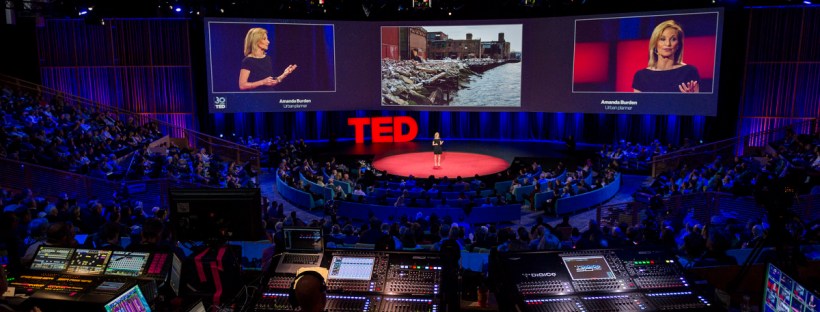
TED Talks for Parents
For several years my church has offered a parenting class as part of its mid-week programming. This class has looked at church-y books, secular books, and dvd-based how-to studies. Through it all, the main expectations from the parents have been: 1) keep it real, and 2) don’t expect us to read anything ahead of time.
This fall we’re using TED Talks as our curriculum, and we’re looking at these videos through the bifocal lenses of parenting and faith. Continue reading
WWJT
This last Saturday I was with a group from Salem Presbytery exploring what it means to be The Hopeful Church. We looked at the current state of Christian education in mainline churches, particularly the PC(USA). We talked about how difficult it is to change the model of Sunday School with which many of us have grown up.
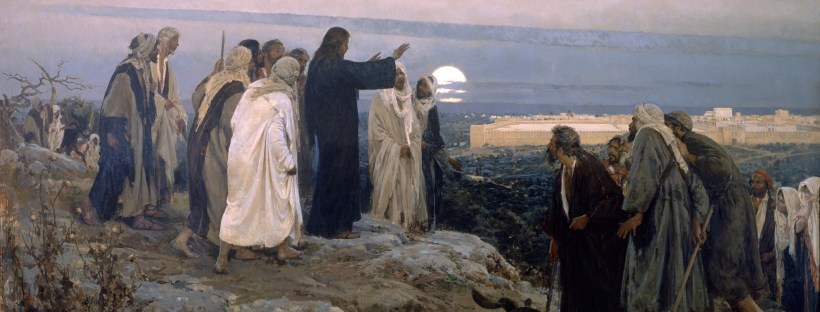
Then we tried an activity to break us out of our preconceived notions of what Christian Education is about. I called it WWJT, which could be translated “What Would Jesus Teach?” or “Where Would Jesus Teach?” Continue reading
The Essence of Being Human
Ubuntu is an African worldview that is hard to translate into Western culture. Archbishop Desmond Tutu has offered several definitions. One of them is “my humanity is caught up, is inextricably bound up, in what is yours.” But he offers another definition, simple and profound, that resonates with me: Ubuntu is “the essence of being human.”
Two weeks ago a group of Columbia Theological Seminary students representing various ethnic and cultural traditions began their journey as Practical Theology students. None knew what to expect – of the school, the program or each other – but we were all united as one by the radical love of Jesus and the unifying power of the Spirit.
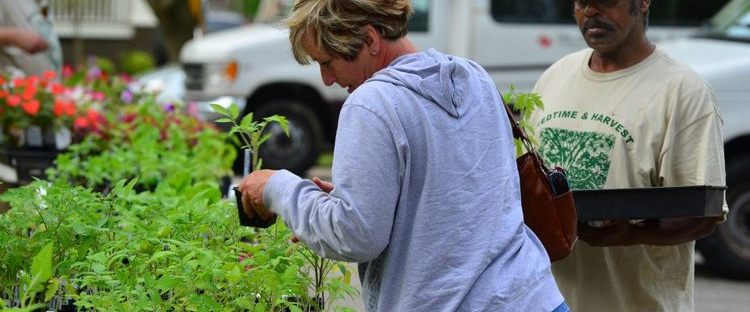
During an intense week-long session, half of the class journeyed to be with members of the Friendship Center of Holy Comforter Church. For over 15 years, the Friendship Center has provided services to individuals marginalized by poverty, serious mental illness, and disability. Funded by small grants, the Episcopal Diocese and friends, The Friendship Center offers three programs: Wellness and Recovery, Art and Gardening and Community and Relationship Building. Continue reading
The One Year Seminary
This is certainly one approach to adult education. I wonder how you structure your faith formation for adults. KLD
Words of Hope
According to an Atlanta Journal-Constitution article and the Department of Homeland Security, there are estimated to be 480,000 immigrants of all ages and genders living without legal status in Georgia in 2010. Georgia is also home to three operating detention facilities housing those apprehended without proper documentation and/or other offenses.
The circumstances of many of the detainees involve weeks awaiting a fate that usually ends in deportation. In some cases, deportation to a country that is unfamiliar, dangerous, without family and without hope of ever seeing U.S. born children again.
The summer of 2013, I was asked by Lutheran Services of Georgia (LSG) to compile a Bible study for female detainees that would compliment their visitation program called Friends in Hope (FIH) Continue reading
Living Till We Die
The study guide, Living Till We Die: a journey of faith practices, was developed from a pilot course held at Hospice of the Upstate (SC) and was made possible through a grant from the Valparaiso Project on the Education and Formation of People in Faith. Recognizing the difficulty people have in discussing end of life issues, the course seeks to create a safe environment to begin that conversation within the community of faith. Continue reading
Protecting Children through Educator Certification
Having recently finished the process of becoming a Certified Christian Educator through the Presbyterian Church USA I am so appreciative of all I’ve learned and put into practice at my church, Wildwood Presbyterian Church in Grayslake, IL, as the Director of Christian Education. Each course that I completed was immediately applicable to my work as an educator and leader and the completion of the exam for certification was at the pinnacle of putting all that I learned into practice in my ministry. The exam involved designing, implementing, and evaluating an educational event within the context of my current educational ministry. I chose to lead the Christian Education Committee through a process to review and update our Child Protection Policy because we were faced with some new insurance requirements. The ten year old policy had only been updated once, seven years ago, and was long overdue for a review.
I offer the lesson plan, handouts and resource research, and the underlying educational and theological rationale essays, from my exam work for use by the Hope4CE community. Perhaps your faith community’s policy needs a review or you are interested in starting a task force to address policy issues. You are invited to glean ideas, use resources, or borrow any concepts from this design for your own project. The lesson plan file associated with this post contains an introduction to the project, lesson plan outline and details, handouts and resources, and an evaluation of my experience implementing the project. Perhaps you are just interested in what value the certification process may hold for you in your educational ministry. If so, you may want to read the rationale essays, each in it’s own file, which detail how my learning from four of the certification areas was integrated into the educational design.
May God bless your learning and teaching!
Gillmore Lesson Plan for Child Protection Policy Review
Gillmore Rationale Essay Biblical Interpretation
Gillmore Rationale Essay Human Growth and Faith Development
Gillmore Rationale Essay Religious Education Theory and Practice
Gillmore Rationale Essay Reformed Theology
Kathy Gillmore
Director of Christian Education
Wildwood Presbyterian Church
Water @This Point
Almost ten years ago, Columbia Theological Seminary inaugurated a new online journal, @ this point: theological investigations in church and culture. The goal of the journal was straightforward: to model (and encourage) theological conversation among Christian laity on important topics of the day and, therein, help shape a more theologically literate church. The format, too, was straightforward: invite a scholar to write a lead essay on an assigned topic, ask three other scholars to write responses to the lead essay, and then have the lead essayist write a reply to the responses. The back-and-forth is intended not to foreclose conversation or thought but to open them up; as such we ask the scholars to end with questions, not criticisms and to highlight new ideas rather than simply assessing old ones. And we strongly encourage our writers to be brief but thoughtful and to avoid academic jargon where possible. “Think of your audience as the people sitting in the pews with you,” we tell them. “They may have college degrees, but those degrees aren’t likely to be in religion or philosophy. So think about the engineer or the schoolteacher in your midst.” Continue reading
What’s a Salon?
I thought a salon was a place one went to have their hair “done” or to get a pedicure. Only recently did I learn that salon originally referred to an important place for the exchange of ideas. According to wikipedia.org, a salon, commonly associated with the French literary and philosophical movements of the 17th and 18th centuries, is a gathering of people in someone’s home for the purpose of education and enjoyment. Salon is thus the perfect name for adult conversational gatherings in private homes.