Happy Easter Monday! This day after Easter has had various meanings and celebrations over the centuries. For many who serve in churches this day is a time to take a deep breath after the busyness of Holy Week. It is interesting that one of the many names for this day is Renewal Monday. It is within that spirit that this post emerged. Continue reading
Holy Week for Leaders
Amidst the palms and pageants, extra services and rituals, it may be difficult to remember why this week is holy and to hear the good news of Jesus’ death and resurrection in a new way as ministry leaders.
So instead of educational activities geared to telling the story to others, which we may have been planning for weeks, today’s post is a collection of resources from around the web that will help us to hear the story anew. The only planning you’ll need to do here is to find 10 minutes or so during this week to read or view some of the following devotional pieces from many different traditions. Continue reading
Climate Justice
Dana Waters is a current Masters of Divinity Student at Columbia Theological Seminary. He also serves in youth ministry. This lesson plan speaks to the conversation we are having in the Facebook group today on Christian Education beyond the walls of the church.
I created this lesson plan after I realized that everyone in my youth group had learned about climate change at school and many other places, but it had never been discussed at church– not even once. How could this be? Continue reading
Biblical Storytelling
Here is something new that isn’t really all that new to “try” – biblical storytelling.
I am part of a liturgical biblical storytelling troupe, whose members “tell” the gospel story (or another of the lectionary text) each week during worship.
Biblical Storytelling is reclaiming the ancient practice- when most of the world was illiterate- of telling the stories of the bible. Biblical Storytelling is the rediscovered ancient art of oral performance of the scriptural text. It’s the way the stories of the bible were always intended to be heard — the way they always were heard before they were written down, and even for centuries after that. Continue reading
Living as Clay Jars
Kira Hader shares with us a lesson plan (in Word or PDF) that she used with middle school students this Fall based on 2 Corinthians 4:6-9. It fits well with the discussion we are having in the Facebook group today around spiritual nourishment and transformation.
The middle school students at the church I have been serving have been going through a curriculum called “Becoming a Woman of God” and “Becoming a Man of God”. Based off of these lessons I wanted to figure out a way to bring all the middle school students together and do a combined lesson that would be similar to their lessons, but presented in a new way. The clay jars passage in 2 Corinthians is one of my favorite passages and a great lesson for the youth to know and learn about. This lesson helps us look at those around us in a different light. Are you bullying people that don’t deserve it? Are we ourselves being bullied by others? How do we change our actions to reflect God’s love for us? Continue reading
What’s NEXT for Christian Education?
Report from 2015 NEXT Church Conference Fourth Presbyterian Church Chicago, March 16-18
What is the NEXT Church?
It’s a movement within the PC(USA) that—in the midst of severe drops in giving, worship attendance and controversial issues like gay rights and Israel-Palestine conflict—shows that the denomination (and it’s churches) aren’t dead. But instead the PC(USA) is changing, expanding and transforming into the body of Christ that God calls it to be. Here’s how the NEXT Church expresses it on their website.
For me, what truly nourishes my heart and soul at the NEXT Church Conferences is morning and evening worship, connecting with friends and colleagues (as well as making new ones), the presentations on new ways of doing ministry/cultural trends/justice and societal issues, and workshops.
While the conference doesn’t explicitly talk about Christian Education ministry, it is faithfully educating Christians about what it means to be the body of Christ and to do God’s work in the world—to (according to this year’s theme) go “beyond our walls, our fears and ourselves” to be Christ’s hands and feet. Continue reading
Childhood and Religion Journal
Launched in 2010, the Journal of Childhood and Religion is a peer-reviewed, free, online journal that provides an interdisciplinary forum for scholars representing a wide range of research fields, interests, and perspectives that relate to children and religion. Such fields include religious studies, biblical studies, the range of human sciences, pastoral psychology, practical theology, pastoral theology, religious education, psychology of religion, sociology of religion, counseling psychology, social work, and cultural studies. JCR publishes articles dealing with childhood, youth, adolescence, and young adulthood, recognizing that these terms operate differently in a variety of cultural contexts. The journal welcomes original scholarship by recognized experts in their respective fields, but also seeks submissions from junior scholars as well as practitioners in work that supports children. Continue reading
Next Church Conference
On March 16, 2015, we looked at a database of Christian Educators of the 20th Century. Today we focus on emerging leaders in the church, specifically the Presbyterian Church (USA) and what they may be thinking about educational ministry and faith formation for the present and future church. The Next Church movement is a network of leaders in the PC(USA) committed to hopeful conversations and reflections on ministry that is more relational, diverse, and collaborative. They host an annual conference and regional gatherings to carry out their mission. If you want to catch this year’s annual conference that began yesterday, they are offering live streaming on their website. There are also members of our Hope4CE Facebook group in attendance this year, who will be contributing their insights via Twitter, Facebook, or through this site.
A portion of this conference is set aside to present short Ignite talks (no more than seven minutes) that detail innovative ideas on a variety of topics. One of these talks from last year, by Landon Whitsitt is linked here. It launched a site of free resources (short videos with accompanying study guides) for new member and church officer training called Theocademy. Although designed specifically to address theology and polity in the Reformed tradition, they may be useful to others beyond the PC(USA) or to “ignite” your own ideas regarding educational ministry for these groups.
I wonder how you address new member and officer training in your church or denomination.
Kathy Dawson, Associate Professor of Christian Education, Columbia Theological Seminary

Christian Educators of the 20th Century Project
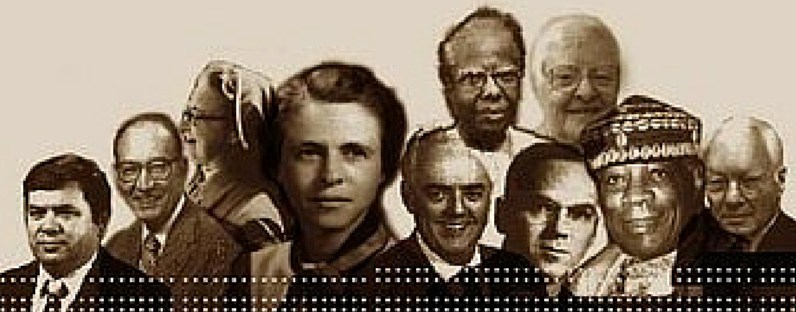
The Christian Educators of the 20th Century project was funded by the Lilly Endowment and is a web-based database. This site provides entries on about 200 Christian education leaders of the 20th century who had a significant impact on the field of Christian education in North America. It has entries on Catholic, Protestant (mainline and evangelical), and Orthodox Christian education leaders, including: pictures, biographical essays, essays on their contributions to the field of Christian education, bibliographies of their publications, excerpts of their writings, and a beginning reading list for those who have never read anything by them. Continue reading
Interfaith Dialogue
We are at the height of living through the Christian holy days of Lent and Easter. At the same time, we may find ourselves in conversations with people of other faiths who may not understand what we are celebrating or why it is important to Christians. In the same manner we may not fully understand our Jewish brothers and sisters in their Passover celebrations or our Hindu neighbors in their Holi celebrations at this same time of year.
How do we begin to understand the diversity of faith expressions that surround us here in the United States? What are helpful ways of teaching and learning about others’ religious traditions and beliefs, as well as explaining our own Christian faith to them? Continue reading