Earlier this week we looked at Maria Harris’ three questions of what may be living, dying, or rising in educational ministry. I’m working on a project now where I need to write an apologetic for reading books in the digital age and am wondering if the reading of printed books is something that may be dying. Will it go the way of cursive writing in this ever increasing proliferation of electronic devices? Is there something inherently different in the way our brains work when we pick up a book with paper and ink and when we pick up a tablet or sit in front of a screen to read? Continue reading

Category: Food for Thought
Living, Dying, Rising
Happy Easter Monday! This day after Easter has had various meanings and celebrations over the centuries. For many who serve in churches this day is a time to take a deep breath after the busyness of Holy Week. It is interesting that one of the many names for this day is Renewal Monday. It is within that spirit that this post emerged. Continue reading
What’s NEXT for Christian Education?
Report from 2015 NEXT Church Conference Fourth Presbyterian Church Chicago, March 16-18
What is the NEXT Church?
It’s a movement within the PC(USA) that—in the midst of severe drops in giving, worship attendance and controversial issues like gay rights and Israel-Palestine conflict—shows that the denomination (and it’s churches) aren’t dead. But instead the PC(USA) is changing, expanding and transforming into the body of Christ that God calls it to be. Here’s how the NEXT Church expresses it on their website.
For me, what truly nourishes my heart and soul at the NEXT Church Conferences is morning and evening worship, connecting with friends and colleagues (as well as making new ones), the presentations on new ways of doing ministry/cultural trends/justice and societal issues, and workshops.
While the conference doesn’t explicitly talk about Christian Education ministry, it is faithfully educating Christians about what it means to be the body of Christ and to do God’s work in the world—to (according to this year’s theme) go “beyond our walls, our fears and ourselves” to be Christ’s hands and feet. Continue reading
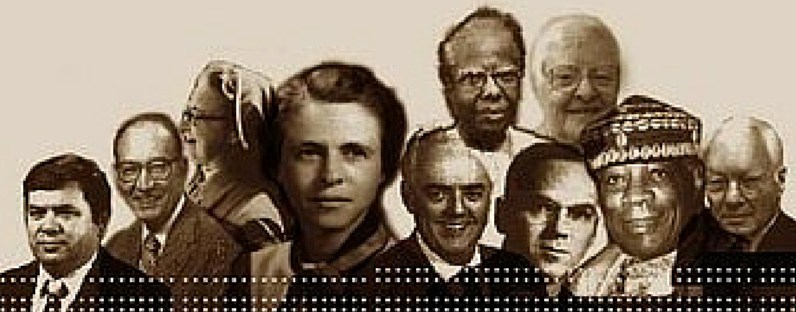
Christian Educators of the 20th Century Project
The Christian Educators of the 20th Century project was funded by the Lilly Endowment and is a web-based database. This site provides entries on about 200 Christian education leaders of the 20th century who had a significant impact on the field of Christian education in North America. It has entries on Catholic, Protestant (mainline and evangelical), and Orthodox Christian education leaders, including: pictures, biographical essays, essays on their contributions to the field of Christian education, bibliographies of their publications, excerpts of their writings, and a beginning reading list for those who have never read anything by them. Continue reading
Interfaith Dialogue
We are at the height of living through the Christian holy days of Lent and Easter. At the same time, we may find ourselves in conversations with people of other faiths who may not understand what we are celebrating or why it is important to Christians. In the same manner we may not fully understand our Jewish brothers and sisters in their Passover celebrations or our Hindu neighbors in their Holi celebrations at this same time of year.
How do we begin to understand the diversity of faith expressions that surround us here in the United States? What are helpful ways of teaching and learning about others’ religious traditions and beliefs, as well as explaining our own Christian faith to them? Continue reading
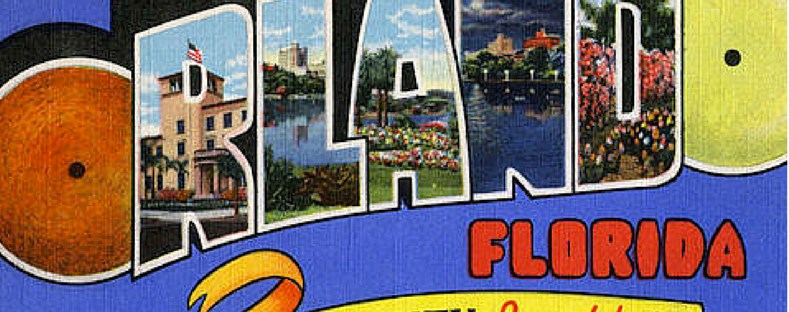
Aims of Edutainment Parks
Last week I had the opportunity to spend a week in Florida and visited three different places designed to both entertain and educate, thus edutainment parks. They were the Holy Land Experience, the Wizarding World of Harry Potter in the Universal parks, and Disney World. I could do a blog review of each, because there are definitely positives and negatives to each experience, but instead I was struck by their differing overall aims and how it shaped the way they crafted their experiences for the visitor. Continue reading
Faith Forming Ecosystem
John Roberto is a well-known voice in the area of faith formation.
His book and initiative, Faith Formation 2020 has touched the lives of many. He has inspired churches to think beyond their current membership to those who may not even be aware of what they might be hungering for spiritually. Continue reading
The Last Thing You Should Do Is Buy Church Curriculum
Israel Galindo asks us to rethink the concept of curriculum in today’s reblog of his post earlier this week in Columbia Connections. Curriculum is more than the printed resources we may choose and use on Sunday mornings. I wonder how you’ve used this concept in your church.
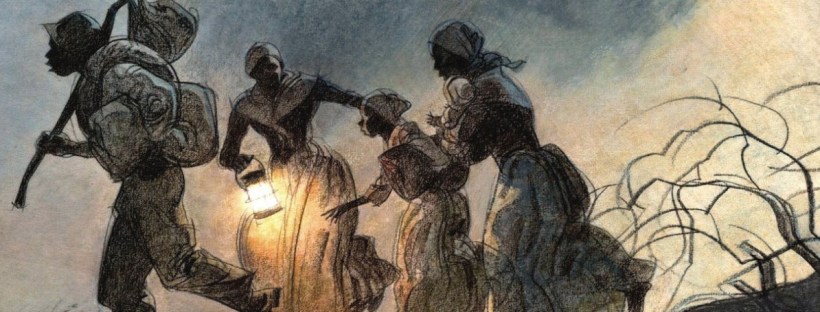
Underground Railroad Educational Model
From time to time in these postings, I’m hoping we can take a step back and explore new models for educational ministry. This is one of those days. Several years ago, I was privileged to hear the attached paper presented at the Religious Education Association’s annual meeting. I hear a lot of academic papers presented, but this particular one has stayed with me and sparked creative ways of thinking of our process of Christian education and the roles that we play in guiding others in faith. Continue reading