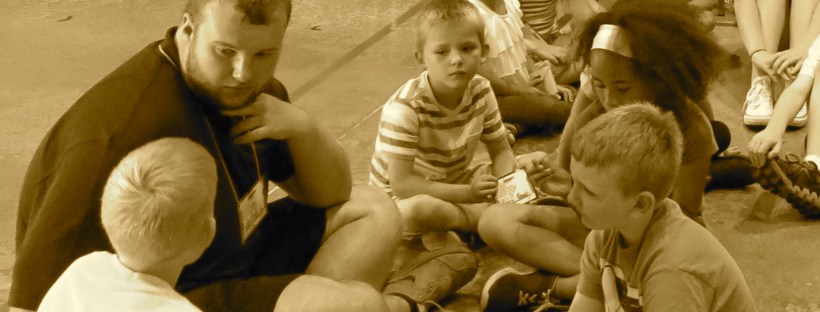
Vacation Bible School-Yesterday and Today

It’s that time of year again when churches around the country hold Vacation Bible Schools in various formats. For a week or more the church is turned into a biblical marketplace or an underwater reef or a host of other locales to combine Scripture, music, crafts, and games to communicate the Gospel to children and others.

But where did this tradition begin? It seems that the first recorded summer Bible school in the United States was instituted by Mrs. Walker Aylette Hawes in 1898 in conjunction with Epiphany Baptist Church on New York City’s east side. Mrs. Hawes noticed how many immigrant children were roaming the streets in the summer, so she searched for a rented facility where she could begin a six-week summer school. The only available facility was a saloon and thus VBS was born in a bar. Continue reading
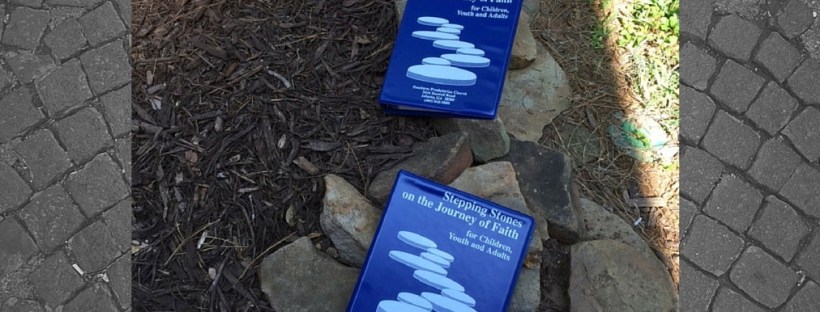
Stepping Stones in Faith

One Church’s Process to Identify the Basic Milestones on the Journey of Faith…

Over twenty years ago in my early days as Minister of Education at Peachtree Presbyterian Church in Atlanta, GA we began to talk together about what were the most important concepts to teach our children, youth and adults. We needed a plan and a goal. So we formed a committee! But what a gift this committee became to me and our ministry together. For as we met over more than a year and a half we began to solidify what became the foundational book of our Christian Education at Peachtree – Stepping Stones on the Journey of Faith. I don’t remember the term milestones at that point in time but our work does seem to relate to the emphasis that is now found in many churches in providing milestones for the journey of faith.

As we got started I did some research to see if there was a document in existence that listed what the important concepts of our faith were and at what age they should be taught. I remember having a conversation with Liz McWhorter at the PC(USA) national offices who told me they had always talked about creating something like this but never had that she knew of. She challenged me to create it. So we began our work together at ground zero and it was well worth it.

Continue reading

The Church Finding a Voice

Von Clemans offers these important insights on how the ways we communicate information in the church are changing. This is a reblogged post from the APCE Adovocate via Kaye Bledsoe.

kayebledsoe's avatarkayebledsoe

Goldfish Have Eight by Von Clemans (copied from APCE ADVOCATE Journal)

On a recent Sunday I passed through the narthex and noticed the large pile of bulletins left by departing worshipers. At least three-quarters of all the bulletins printed for that day were destined for the recycling bin. In each folded paper were dozens of carefully crafted announcements designed to engage and attract people to essential opportunities for their growth in faith. I’d like to think church people had memorized all the pertinent details for future reference. But the truth is many of them did little more than scan them. I know that because our weekly email newsletter is opened by less than half of the recipients, with a click-through rate of less than five percent.  Messages are going out but not being received.

Why?  Because communication patterns have changed. Information hits us from every direction in every possible media…

View original post 1,016 more words

Copyright and Educational Fair Use- Part 3

Still have questions about fair use exception? Here are several more helpful guidelines to help you make the appropriate decision.

The general guideline is that authors or creators keep copyright at least 70 years after their death. If a work is of corporate authorship, the copyright lasts 95 years from publication or 120 years from creation, whichever expires first.

You ask what percentage of a work is okay within the fair use exception. The following table might help. Continue reading

Copyright and Educational Fair Use- Part 2

In my previous blog, I introduced the rights of the copyright holder or owner. When the Founding Fathers set up the copyright laws, they were aware of the social impact that innovation and new research can have on an emerging society, especially at the time when copyright law was created. In addition, they believed that the public should have access to these creations, particularly ones coming from academic research and scholarship. The Founding Fathers, therefore, created Section 107, which is an exception to the copyright law and is called the fair use exception. Continue reading

Is reading books a dying art?

Earlier this week we looked at Maria Harris’ three questions of what may be living, dying, or rising in educational ministry. I’m working on a project now where I need to write an apologetic for reading books in the digital age and am wondering if the reading of printed books is something that may be dying. Will it go the way of cursive writing in this ever increasing proliferation of electronic devices? Is there something inherently different in the way our brains work when we pick up a book with paper and ink and when we pick up a tablet or sit in front of a screen to read? Continue reading