This week we will be featuring the wisdom of Dr. Israel Galindo for several posts. This first one talks about the personal care that educators so often ignore in their ministries. This is a reblog from Columbia Connections.

This week we will be featuring the wisdom of Dr. Israel Galindo for several posts. This first one talks about the personal care that educators so often ignore in their ministries. This is a reblog from Columbia Connections.

Almost ten years ago, Columbia Theological Seminary inaugurated a new online journal, @ this point: theological investigations in church and culture. The goal of the journal was straightforward: to model (and encourage) theological conversation among Christian laity on important topics of the day and, therein, help shape a more theologically literate church. The format, too, was straightforward: invite a scholar to write a lead essay on an assigned topic, ask three other scholars to write responses to the lead essay, and then have the lead essayist write a reply to the responses. The back-and-forth is intended not to foreclose conversation or thought but to open them up; as such we ask the scholars to end with questions, not criticisms and to highlight new ideas rather than simply assessing old ones. And we strongly encourage our writers to be brief but thoughtful and to avoid academic jargon where possible. “Think of your audience as the people sitting in the pews with you,” we tell them. “They may have college degrees, but those degrees aren’t likely to be in religion or philosophy. So think about the engineer or the schoolteacher in your midst.” Continue reading
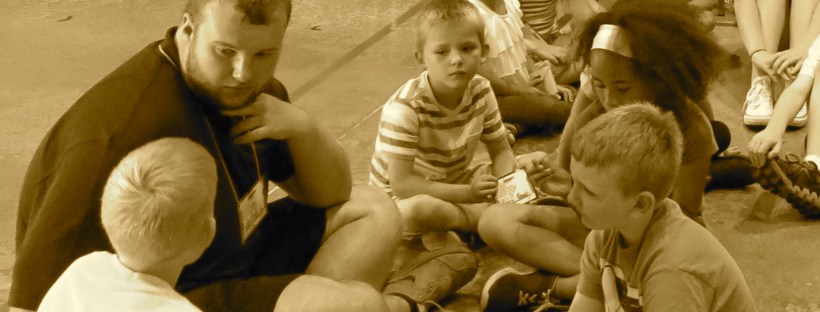
It’s that time of year again when churches around the country hold Vacation Bible Schools in various formats. For a week or more the church is turned into a biblical marketplace or an underwater reef or a host of other locales to combine Scripture, music, crafts, and games to communicate the Gospel to children and others.
But where did this tradition begin? It seems that the first recorded summer Bible school in the United States was instituted by Mrs. Walker Aylette Hawes in 1898 in conjunction with Epiphany Baptist Church on New York City’s east side. Mrs. Hawes noticed how many immigrant children were roaming the streets in the summer, so she searched for a rented facility where she could begin a six-week summer school. The only available facility was a saloon and thus VBS was born in a bar. Continue reading

This Sunday marks a holiday in the United States that is mostly forgotten–Flag Day. It commemorates the official adoption of The Stars and Stripes as our national flag on June 14, 1777. Before this there were many flags in use and so the adoption of one flag style was an act of unifying the colonial forces fighting during the Revolutionary War.
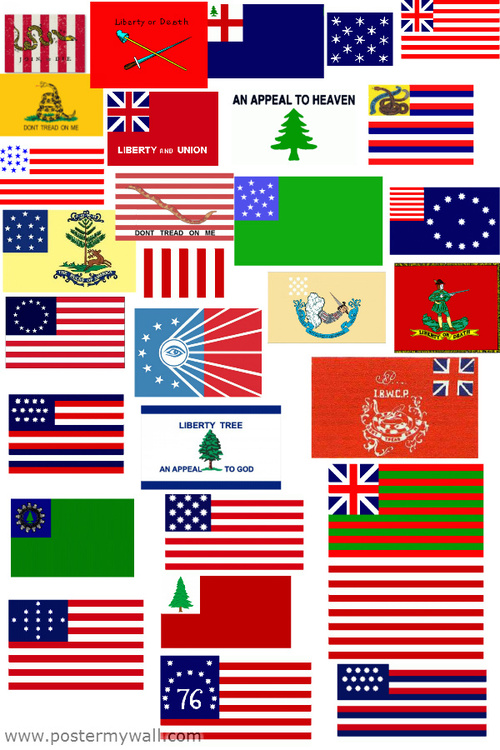
In many sanctuaries this flag is accompanied by another called the Christian flag. Did the Christian flag come to be as an act of unifying the forces during the Crusades? Was it designed by an ecumenical church council that drafted an accompanying creed or confession? Continue reading
In your teaching, remember to use the fair use criterion when deciding where to use an article, video, music, image, or other intellectual property created by others. Below are some simple ways to keep it legal. Continue reading
Still confused about copyright? Three more terms, open content, public domain, and creative commons, need to be explained. Copyrighted materials can be found in multiple locations. These specific terms help since educators frequently create content and might want to protect their own work. Continue reading
Still have questions about fair use exception? Here are several more helpful guidelines to help you make the appropriate decision.
The general guideline is that authors or creators keep copyright at least 70 years after their death. If a work is of corporate authorship, the copyright lasts 95 years from publication or 120 years from creation, whichever expires first.
You ask what percentage of a work is okay within the fair use exception. The following table might help. Continue reading
In my previous blog, I introduced the rights of the copyright holder or owner. When the Founding Fathers set up the copyright laws, they were aware of the social impact that innovation and new research can have on an emerging society, especially at the time when copyright law was created. In addition, they believed that the public should have access to these creations, particularly ones coming from academic research and scholarship. The Founding Fathers, therefore, created Section 107, which is an exception to the copyright law and is called the fair use exception. Continue reading
Normally when people hear the word “copyright”, their mouths open and their eyes glaze over; however, with the changing landscape of digital documents and images and especially with technology that allows fast and easy sharing, now is the time to get up to date on what is legal and what is not. To start, let me begin with some basics. Continue reading

Dominique Robinson begins a series based on her Doctor of Ministry research on preaching and teaching for “Black Millennials.” Thanks to Columbia Connections for sharing of the beginning of her series. There is much here for all to contemplate in addressing this digital generation.
Here is the link to Part II. She has also done a public presentation on this and is willing to share her bibliography for this event.
 hope4ce