Is Everything Fine?

Everything’s fine…

That is what I keep telling myself. The truth is that it is not.

I have no new ideas.

Asian woman with post-it notes all over her and her computer


I see your ideas on Facebook and hear them in Zoom meetings. I do. They’re great. I read them and feel like I am in 8th grade again and am jealous of Kristin’s Guess Jeans. I want a triangle on my bum, but my mom says I have to pay for half and I am lazy. I am jealous of the ideas, but am so burnt out right now.


Am I down on myself? For sure, but after meeting with the Hope4CE Steering Committee I know that I am not alone. We are all feeling it. Maybe you can’t pack one more bag, do one more porch drop off, edit one more video, look at one more poorly attended Zoom meeting. I am here to tell you that it is ok.

Continue reading

Puppetry and The Pandemic

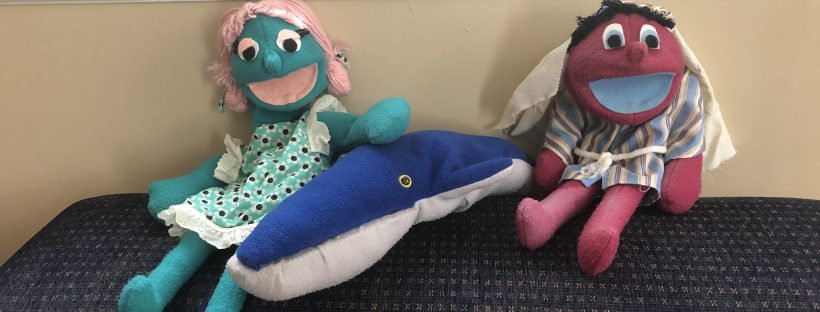
I have learned many new technology skills during this time of physical isolation and virtual ministry. I’m sure you have, too. I’ve also discovered that I could reach back to skills that I haven’t exercised in a while that find new life in these challenging times.

One of those skills is the art of puppetry. I’ve always been enamored with puppets, since my time growing up with the likes of Captain Kangaroo, Shari Lewis, and later Fred Rogers and the Muppets. There is something magical that happens when you animate these pieces of fabric and stuffing into a living character with particular personality traits.

Continue reading

Beyond the Book Club: Anti-Racist Children and Family Ministry

This is a reblog from Christine V Hides’ site with her permission. This is a very important post for our times and for our ongoing work in loving our neighbors. KLD

Christine H.'s avatarChristine V Hides

There seems to be a pattern. Whenever a video of a Black person being killed emerges, shock and outrage fill our social media feeds. White people begin to ask (again), “what can we do?” Booklists begin to circulate (again) on social media. Book clubs begin (again). Fortunately, there is a wealth of excellent resources for learning about the history of systemic racism in the United States. There are also amazing lists of books to read with children and tips to help White parents to have important conversations about race. I am grateful for the hard work and effort of those who write and curate these resources and the churches who engage with these hard conversations. But…

Unfortunately, in both society and in Children and Family Ministry our efforts often don’t move beyond the book club. White colleagues, let’s not wait until the next horrifying news event to take…

View original post 1,870 more words

The Eucharist Has Left The Building

Jesus told the Samaritan woman in the Gospel of John, “Woman, believe Me, the hour is coming when you will neither worship God on this mountain, nor in Jerusalem…But the hour is coming, and now is, when the true worshipers will worship the Father in spirit and truth; for the Father is seeking such to worship Him. God is Spirit, and those who worship Him must worship in spirit and truth.” John 4:21-24

For the first time in my lifetime, the entire congregation is on the church’s shut-in list. We have been mandated to “shelter-in-place” and practice social distancing whenever we venture out of the house due to the COVID-19 pandemic. In addition, churches have turned to social media platforms like Zoom, Periscope and Facebook Live to carry on the business of the church. Bible studies, small group gatherings, and the worship experience have been moved from the church house to our house. We are forced to go beyond the four walls of the sacred sanctuary into living rooms, and family rooms to partake in study and worship.  For some of us this is the first time that we’ve had spiritual formation experiences outside of the church. Our biggest challenge, however, has been what in the world do we do for communion? For the most part, we have adapted to going to church in the living rooms across the country. It is reminiscent of the early church which got its start in the homes of the early Christians.[1]  So, what does that look like for us on first Sunday? How do we experience Holy Communion when we are not there to physically partake of the liturgy and elements?

Continue reading

Bytes of Faith-An Idea for Faith Formation

When Covid-19 stay at home orders came in March, our congregation was caught off guard.  Our Christian Education ministry relied on face-to-face gatherings.  From Sunday School to youth Confirmation, Wednesday night LOGOS to weekly small groups, we were used to traditional ways of doing Christian education.   And we were in the midst of our Lenten Small Group study!  Teacher training events never talked about what happens during a pandemic when you are told to physically social distance from other people.

Continue reading

Mother’s Day

I am a mother of two. One bright, creative, full of life five year old and her sister who lives in heaven. Mother’s Day has always been tricky for me. Don’t get me wrong. I love recognizing my mom, both of my grandmothers and the many other important “mothering” people in my life. My living child has an amazing godmother and many positive female role models but Mother’s Day is a challenge.

Continue reading

Christian Faith, the Bible, and Public Schools

My mother began her teaching career in the public schools in the early 1970s. Over the years, she has recounted the times when she was expected to read the Bible to students. She remembers lovingly sharing Bible stories and even praying with her elementary-aged students. However, as the years passed, those expectations changed, and by the time she retired a few years ago, she no longer read—and wonders if she would have been allowed to read—Bible stories to students.

There is no question that the role of the Bible and Christian faith in the public schools has changed dramatically over the last half century. Some of these changes have been for the better; others have been less positive. Still, it has left some wondering, “Is there a place for the Bible and Christian faith in American public schools today? And, if so, what is it?”

Continue reading

All Aboard the Intergenerational Train!

In their seminal work Generations: The History of America’s Future, 1584-2069, William Strauss and Neil Howe describe generations metaphorically as distinct trains carrying groups of like-minded people to stations that represent the different stages of life. For instance, today, the “Millennial” train is passing through the rising adulthood station and the “Generation X” train is passing through the midlife station. Strauss and Howe posit that each train looks different to observers as they come through each station because each generation has a distinct character.

Generation theory (and its precursors) has been around for a quarter-century now. Perhaps an older notion than that is the presumption of a “gap” between each generation that makes living together more difficult. This perception has been aided by a trend in American society toward age segregation over the last 100 years, with the youngest Americans receiving an education separate from adults, who are in the workplace, and separate from the oldest Americans, who are retired. That is a major shift from what was previously a largely agrarian society. Continue reading