TED Talks for Parents

For several years my church has offered a parenting class as part of its mid-week programming. This class has looked at church-y books, secular books, and dvd-based how-to studies. Through it all, the main expectations from the parents have been: 1) keep it real, and 2) don’t expect us to read anything ahead of time.

This fall we’re using TED Talks as our curriculum, and we’re looking at these videos through the bifocal lenses of parenting and faith. Continue reading

Illustrated Children’s Ministry

In my ten years of ministry, serving four different churches, one element of worship that has always been hit-or-miss was the children’s moment.

More often than not, a well-meaning pastor or lay leader would invite the kids up for a few cute jokes, or maybe a creative object lesson that would just go over the kids’ heads. This always annoyed me.

In my last call, as I was exploring and reclaiming my identity as an artist, I began creating illustrations of the lectionary passage for the day, and used those as visual aids to simply tell children the biblical story for the day. I then gave the children a copy of the illustration to take home. Continue reading

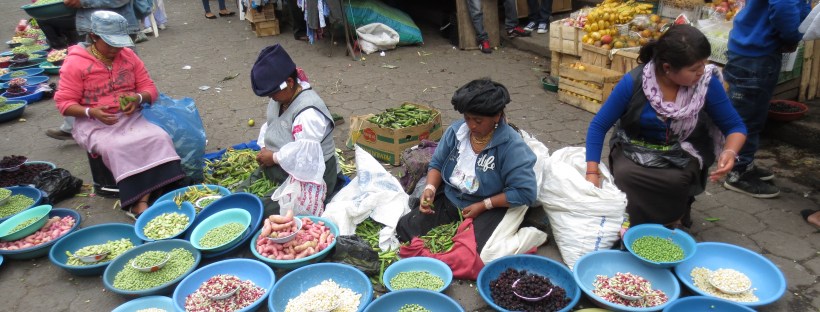
World Food Day

You may not be aware of it, but Thursday, October 16 is World Food Day in Canada and the United States. This day was first established in 1979 in a collective effort to make the needs of hungry people known to the world at large.

Each year the World Food Programme(WFP)  of the United Nations publishes sobering facts about the number of hungry people in the world. Did you know, for instance, that there are at least 795 million people in the world who will go to bed hungry tonight? That is about one in every nine people. Asia is the continent that has the most hungry people, although the largest percentages of the total population can be found in sub-Saharan Africa. WFP also provides downloadable hunger maps that make the scope of this problem even more visible.

There are many resources available to churches who wish to educate about and simulate the issue of hunger. Continue reading

Young Worship Tool Box

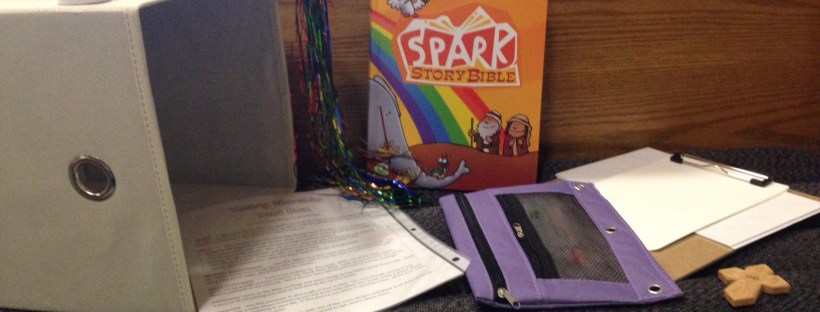
Church culture change is hard! Our congregation had Sunday School at the same time as worship for decades. That changed almost 10 years ago, but we are still finding that families have a hard time feeling welcome in worship. The culture for including children has not yet changed. A team of people decided to make some small steps to work on that. Continue reading

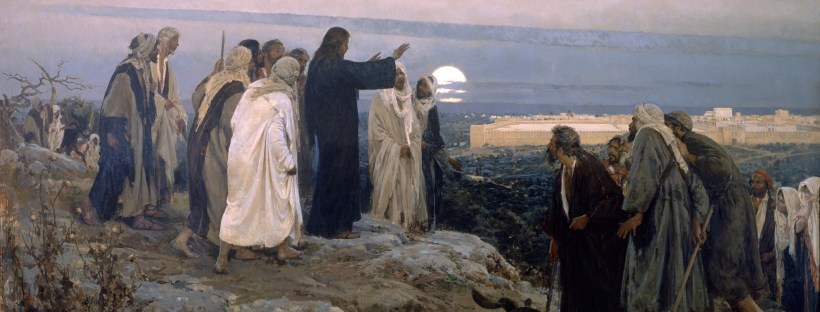
WWJT

This last Saturday I was with a group from Salem Presbytery exploring what it means to be The Hopeful Church. We looked at the current state of Christian education in mainline churches, particularly the PC(USA). We talked  about how difficult it is to change the model of Sunday School with which many of us have grown up.

Then we tried an activity to break us out of our preconceived notions of what Christian Education is about. I called it WWJT, which could be translated “What Would Jesus Teach?” or “Where Would Jesus Teach?” Continue reading

All Aboard the Intergenerational Train!

In their seminal work Generations: The History of America’s Future, 1584-2069, William Strauss and Neil Howe describe generations metaphorically as distinct trains carrying groups of like-minded people to stations that represent the different stages of life. For instance, today, the “Millennial” train is passing through the rising adulthood station and the “Generation X” train is passing through the midlife station. Strauss and Howe posit that each train looks different to observers as they come through each station because each generation has a distinct character.

Generation theory (and its precursors) has been around for a quarter-century now. Perhaps an older notion than that is the presumption of a “gap” between each generation that makes living together more difficult. This perception has been aided by a trend in American society toward age segregation over the last 100 years, with the youngest Americans receiving an education separate from adults, who are in the workplace, and separate from the oldest Americans, who are retired. That is a major shift from what was previously a largely agrarian society. Continue reading

Camp and Conference Remix-Part 2

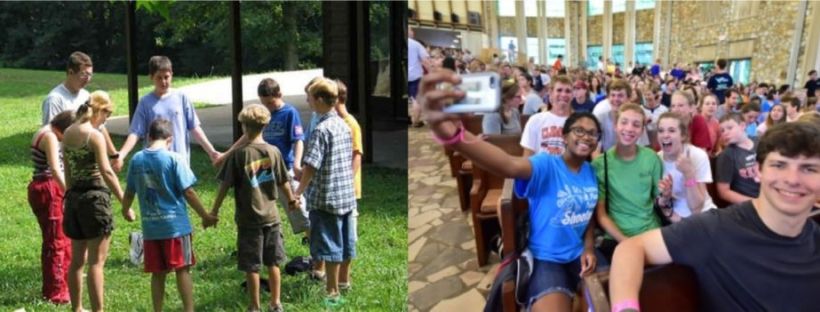
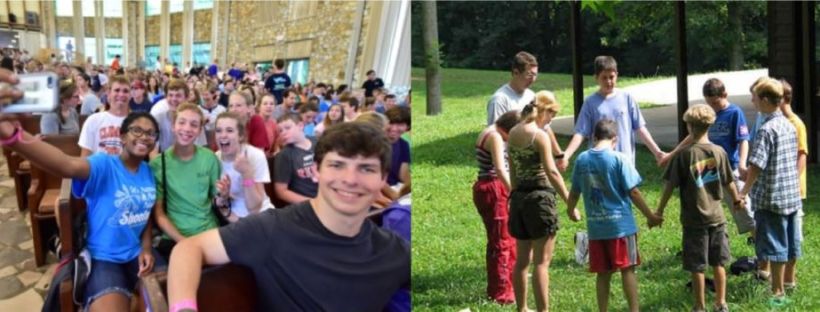
As we discussed yesterday, some significant Christian Education happened at our camps and conference centers this summer. Children and youth from your congregation may have had a “mountain top experience,” a significant faith experience that brought them closer to God. Not only do we need to acknowledge a possible milestone on their faith journey, it is also important for us to share their experience with the rest of the congregation. Connecting with them as the church helps sustain this significant faith experience.

Yesterday we talked about conferences, so today we will discuss how we might connect with your children and youth after their summer camp experience. Here are some suggestions: Continue reading

Camp and Conference Remix- Part 1

The summer is drawing to a close. Vacation Bible School and mission trips are in the rear view mirror as the focus is moving towards Rally Day and fall programs. During this transition, let’s not forget that some significant Christian Education happened this summer…at our camps and conference centers. The children and youth of your congregation participated in a variety of programs over the summer. These individuals may have had a “mountain top experience,” a significant faith experience that brought them closer to God. Not only do we need to acknowledge a possible milestone on their faith journey, it is also important for us to share their experience with the rest of the congregation. Connecting with them as the church helps sustain this significant faith experience.

Connecting with your youth on conference experiences is a little easier. Adult advisors on those trips can help with the post-conference follow-up. Here are some suggestions: Continue reading

The Essence of Being Human

Ubuntu is an African worldview that is hard to translate into Western culture. Archbishop Desmond Tutu has offered several definitions. One of them is “my humanity is caught up, is inextricably bound up, in what is yours.” But he offers another definition, simple and profound, that resonates with me: Ubuntu is “the essence of being human.”

Two weeks ago a group of Columbia Theological Seminary students representing various ethnic and cultural traditions began their journey as Practical Theology students. None knew what to expect – of the school, the program or each other – but we were all united as one by the radical love of Jesus and the unifying power of the Spirit.

During an intense week-long session, half of the class journeyed to be with members of the Friendship Center of Holy Comforter Church. For over 15 years, the Friendship Center has provided services to individuals marginalized by poverty, serious mental illness, and disability. Funded by small grants, the Episcopal Diocese and friends, The Friendship Center offers three programs: Wellness and Recovery, Art and Gardening and Community and Relationship Building. Continue reading

The Experiment

We arrive at church for Sunday School early. While I assemble two large salads, my children set up for our feast. The scent of pizza wafts through the door ahead of the steaming boxes. People of all ages gather in a circle to share laughter, prayer, and grace. Tuesday Night Sunday School begins.

It started out as an experiment. Sunday School teachers were difficult to find. Parents were choosing between dropping children off for Sunday School and attending worship, as doing both seemed too time consuming. We wanted worship to be the family focus on Sundays.

Sunday School was banished from Sunday mornings, participation by parents or guardians insisted upon. Amidst skepticism from Church Council members, Tuesday Night Sunday School was born. Continue reading