The internet has ushered in a new way of doing almost everything, from shopping to research. Here at Practical Resources for Churches (PRC), we’ve seen an increase in the use of the internet in how we interact with people, provide resources, and offer learning and growth opportunities. Although we still offer face-to-face experiences through our workshops and roundtables, our webinar program is continually expanding. Continue reading
Category: Around the web
Pentecost Resources
It seems like we just celebrated the glorious news of Easter, but Pentecost, the fiftieth day, is rapidly approaching. This is the day we celebrate the coming of the Holy Spirit and the birth of the church.
This seems to be a holy day where many churches craft their own intergenerational traditions, rituals, and ways of celebrating. Some congregations dress in red and take a church picture. Others release balloons symbolizing the spreading of the Gospel. Some fly kites, make pin wheels, or wave streamers/flags in worship to live out the Holy Spirit’s symbolization of wind in Acts 2, John 3, and in the very Hebrew and Greek words for spirit.
Many denominations provide resources or take up special offerings on this day. Here are some links to the denominational resources I found. What resources and ways of celebrating this festive day, have you found helpful? Continue reading
It’s Planning Season!
Sharon Ely Pearson shares some excellent ideas here on planning for next academic year’s educational ministry programs. I thank her for permission to reblog this post from earlier this month.
All the planning, implementation, and celebrations of Holy Week and Easter Sunday are now a joyful memory, and those of you working in a congregation have hopefully had a quiet week of reflection and rest. But there is no rest for the weary . . . it’s time to begin evaluating this past year and begin planning for the next program year.
A checklist for the coming weeks:
- Collect feedback from volunteer leaders and teachers about what worked and what needs improvement. Plan how you will be recognizing and giving thanks to all those who have given their time and talents this past academic year.
- Begin the discernment process for calling new teachers and volunteers for next year.
- Evaluate the programs and the resources you have been using. Do they need tweaking or refreshment? Poll participants, including children and youth, about what they have found memorable and life-giving over the past…
View original post 294 more words
Preach This, Tweet That (Part I): What Black Millennials are Looking for from the Preacher
Dominique Robinson begins a series based on her Doctor of Ministry research on preaching and teaching for “Black Millennials.” Thanks to Columbia Connections for sharing of the beginning of her series. There is much here for all to contemplate in addressing this digital generation.
Here is the link to Part II. She has also done a public presentation on this and is willing to share her bibliography for this event.
Quicksheets for Youth Ministry
Quicksheets are free quality resources for youth ministry produced by the Presbyterian Church (USA). They are designed to offer quick practical resources for youth leaders and parents of youth. Some of the more recent titles are also available in Spanish language versions. Gina Yeager-Buckley and a team of writers and editors offer new Quicksheets each year. Here’s the link to the complete listing that begins with the most recent.
Two titles that may be especially timely are Faithfully Simple Living by Beth Greaves– a great series of ideas especially appropriate leading into Earth Day and Summer Ideas by Christy Williams and Shannon Guse–giving you many ideas for crafting quick and meaningful lessons for youth during the summer months.
Kathy Dawson, Associate Professor of Christian Education, Columbia Theological Seminary
Holy Week for Leaders
Amidst the palms and pageants, extra services and rituals, it may be difficult to remember why this week is holy and to hear the good news of Jesus’ death and resurrection in a new way as ministry leaders.
So instead of educational activities geared to telling the story to others, which we may have been planning for weeks, today’s post is a collection of resources from around the web that will help us to hear the story anew. The only planning you’ll need to do here is to find 10 minutes or so during this week to read or view some of the following devotional pieces from many different traditions. Continue reading
Childhood and Religion Journal
Launched in 2010, the Journal of Childhood and Religion is a peer-reviewed, free, online journal that provides an interdisciplinary forum for scholars representing a wide range of research fields, interests, and perspectives that relate to children and religion. Such fields include religious studies, biblical studies, the range of human sciences, pastoral psychology, practical theology, pastoral theology, religious education, psychology of religion, sociology of religion, counseling psychology, social work, and cultural studies. JCR publishes articles dealing with childhood, youth, adolescence, and young adulthood, recognizing that these terms operate differently in a variety of cultural contexts. The journal welcomes original scholarship by recognized experts in their respective fields, but also seeks submissions from junior scholars as well as practitioners in work that supports children. Continue reading
Next Church Conference
On March 16, 2015, we looked at a database of Christian Educators of the 20th Century. Today we focus on emerging leaders in the church, specifically the Presbyterian Church (USA) and what they may be thinking about educational ministry and faith formation for the present and future church. The Next Church movement is a network of leaders in the PC(USA) committed to hopeful conversations and reflections on ministry that is more relational, diverse, and collaborative. They host an annual conference and regional gatherings to carry out their mission. If you want to catch this year’s annual conference that began yesterday, they are offering live streaming on their website. There are also members of our Hope4CE Facebook group in attendance this year, who will be contributing their insights via Twitter, Facebook, or through this site.
A portion of this conference is set aside to present short Ignite talks (no more than seven minutes) that detail innovative ideas on a variety of topics. One of these talks from last year, by Landon Whitsitt is linked here. It launched a site of free resources (short videos with accompanying study guides) for new member and church officer training called Theocademy. Although designed specifically to address theology and polity in the Reformed tradition, they may be useful to others beyond the PC(USA) or to “ignite” your own ideas regarding educational ministry for these groups.
I wonder how you address new member and officer training in your church or denomination.
Kathy Dawson, Associate Professor of Christian Education, Columbia Theological Seminary
Christian Educators of the 20th Century Project
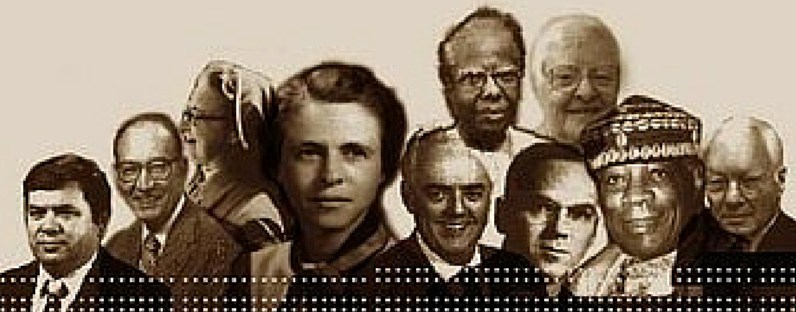
The Christian Educators of the 20th Century project was funded by the Lilly Endowment and is a web-based database. This site provides entries on about 200 Christian education leaders of the 20th century who had a significant impact on the field of Christian education in North America. It has entries on Catholic, Protestant (mainline and evangelical), and Orthodox Christian education leaders, including: pictures, biographical essays, essays on their contributions to the field of Christian education, bibliographies of their publications, excerpts of their writings, and a beginning reading list for those who have never read anything by them. Continue reading
Interfaith Dialogue
We are at the height of living through the Christian holy days of Lent and Easter. At the same time, we may find ourselves in conversations with people of other faiths who may not understand what we are celebrating or why it is important to Christians. In the same manner we may not fully understand our Jewish brothers and sisters in their Passover celebrations or our Hindu neighbors in their Holi celebrations at this same time of year.
How do we begin to understand the diversity of faith expressions that surround us here in the United States? What are helpful ways of teaching and learning about others’ religious traditions and beliefs, as well as explaining our own Christian faith to them? Continue reading